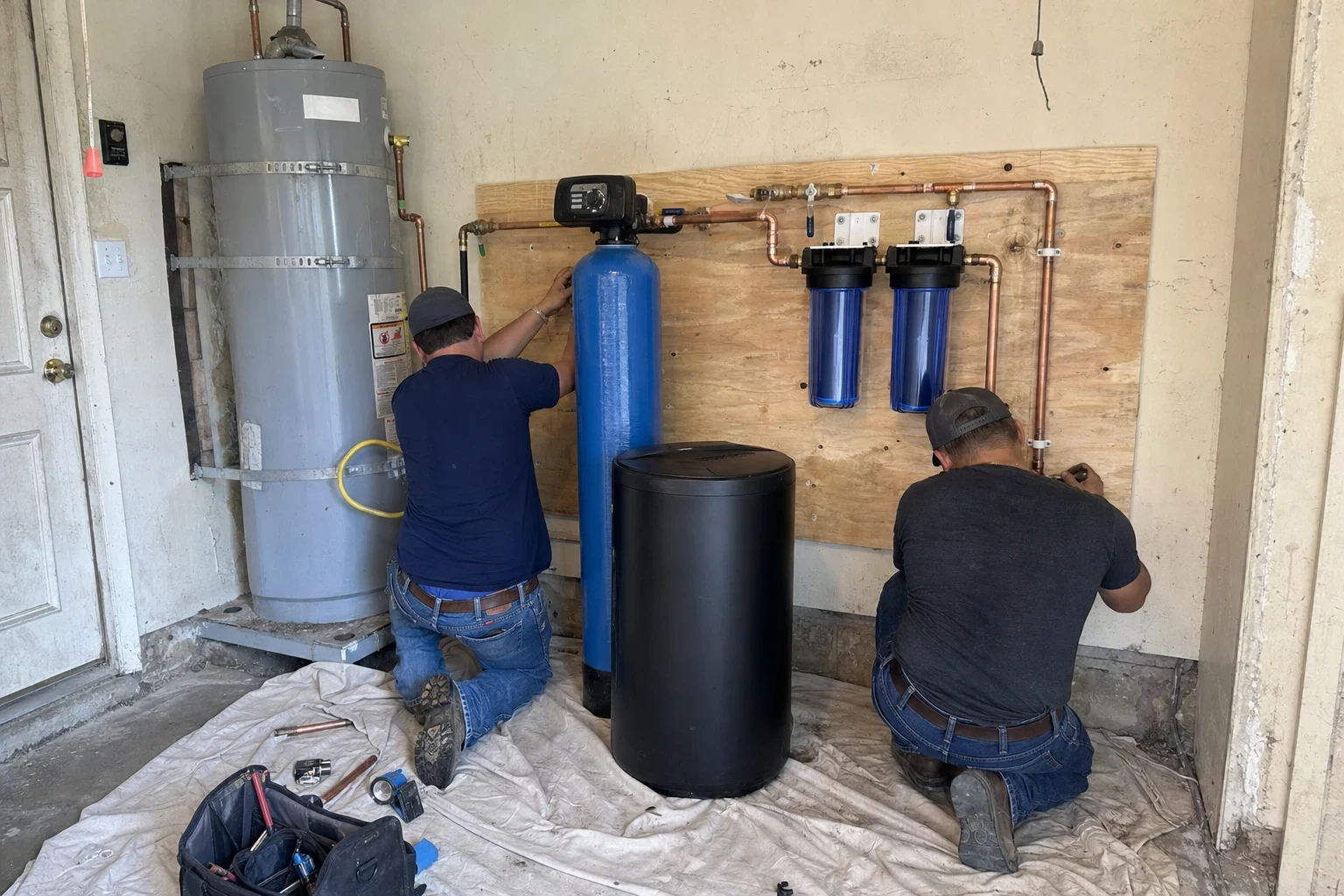
Duncanville Water Filtration Chosen by Your Test Results
We learn what your water carries and where it picks it up before any equipment comes up. The answer could be whole-house carbon for chlorine taste and smell, an under-sink reverse osmosis unit for drinking water, iron and sediment filtration, or a softener if your hardness numbers call for one. Our customers live in Duncanville, DeSoto and Cedar Hill.
- Testing before anything else
- Written, itemized estimates
- Each system sized to the house
- We clean up after every job
Areas We Serve
We work throughout Duncanville and the nearby communities to the south and west. That includes DeSoto, Cedar Hill, Lancaster, Glenn Heights, Ovilla and Cockrell Hill, plus Grand Prairie, Mansfield, Midlothian and Red Oak.
- Duncanville
- DeSoto
- Cedar Hill
- Grand Prairie
- Lancaster
- Glenn Heights
- Ovilla
- Cockrell Hill
- Mansfield
- Midlothian
- Red Oak
Live just outside these towns? Ask when you phone, and we can check the schedule and let you know if a visit to your address works.
Filtration Services Built Around Your Test Results
Every system we install answers a specific reading. Carbon removes chlorine and the taste it leaves; reverse osmosis pushes water through a membrane fine enough to hold back dissolved metals like lead; an oxidizing media bed catches iron before it stains a fixture. Start with water testing, and the rest of the list sorts itself out. We also handle filter replacement and maintenance on systems already in your home, including ones we did not install.
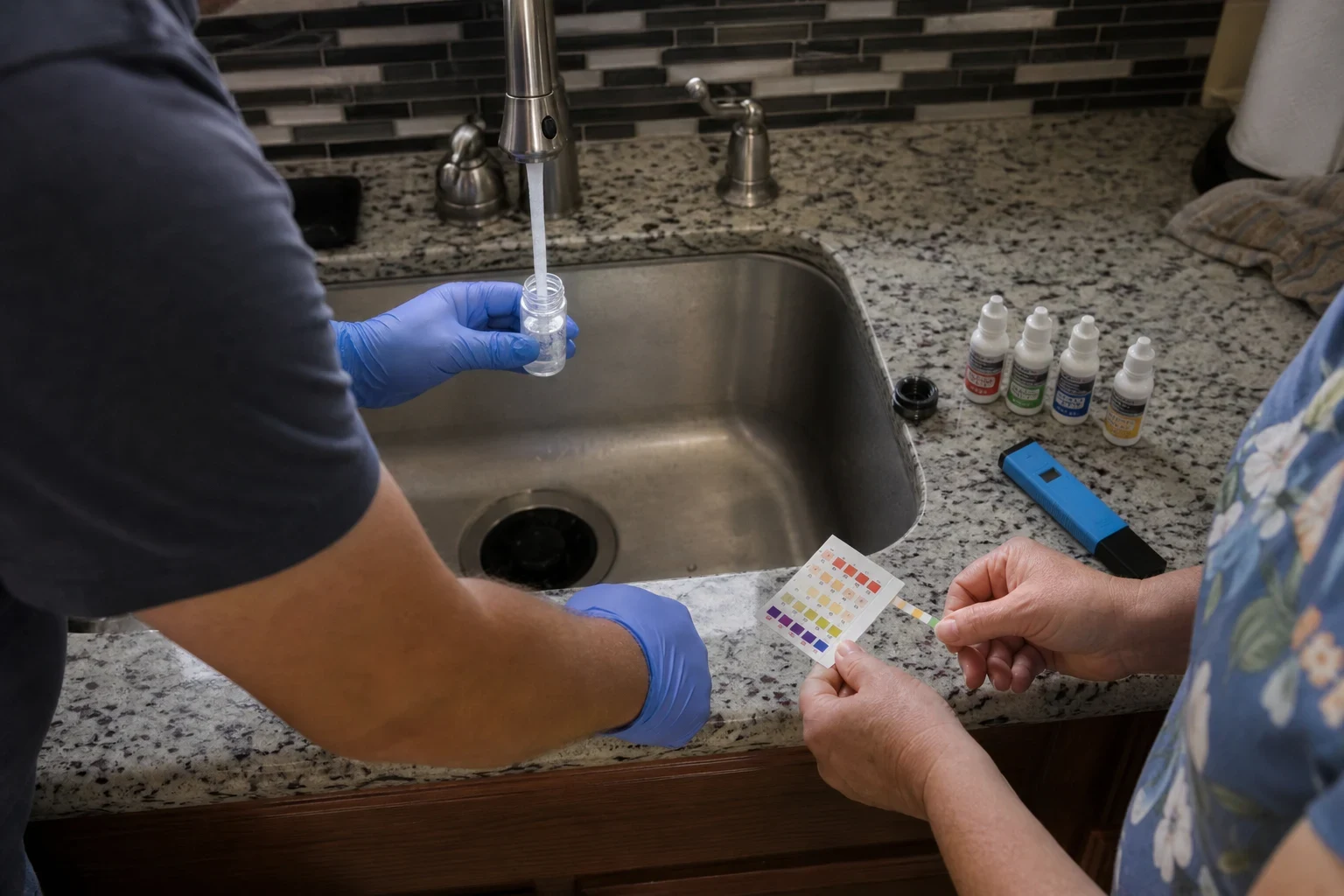
Water testing
We measure hardness, chlorine, iron, TDS and pH at your tap, send lab samples when needed, and explain what the numbers mean before anything is installed.
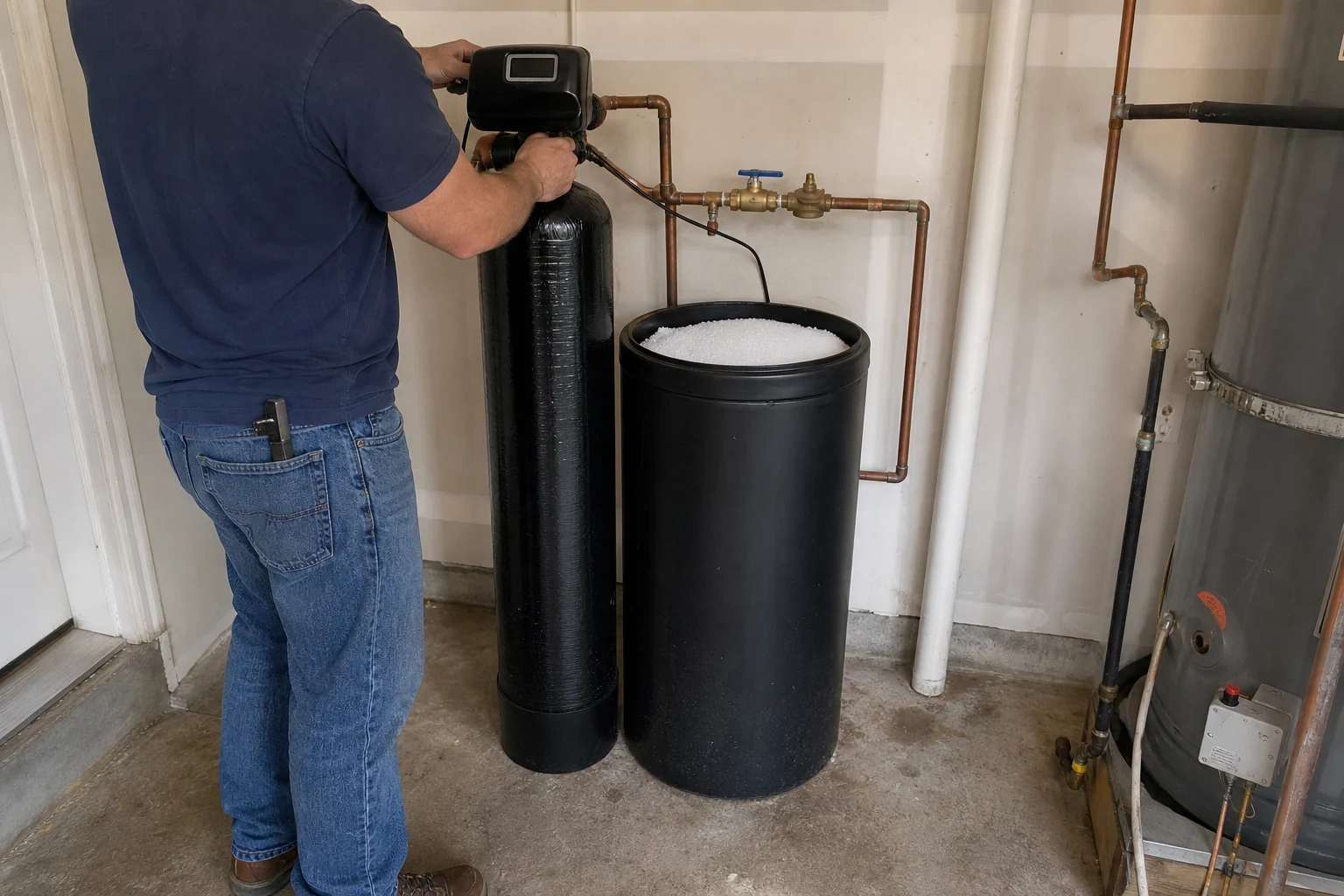
Water softeners
A measured hardness reading decides whether you need a softener, and the same number sets its grain capacity and regeneration schedule.
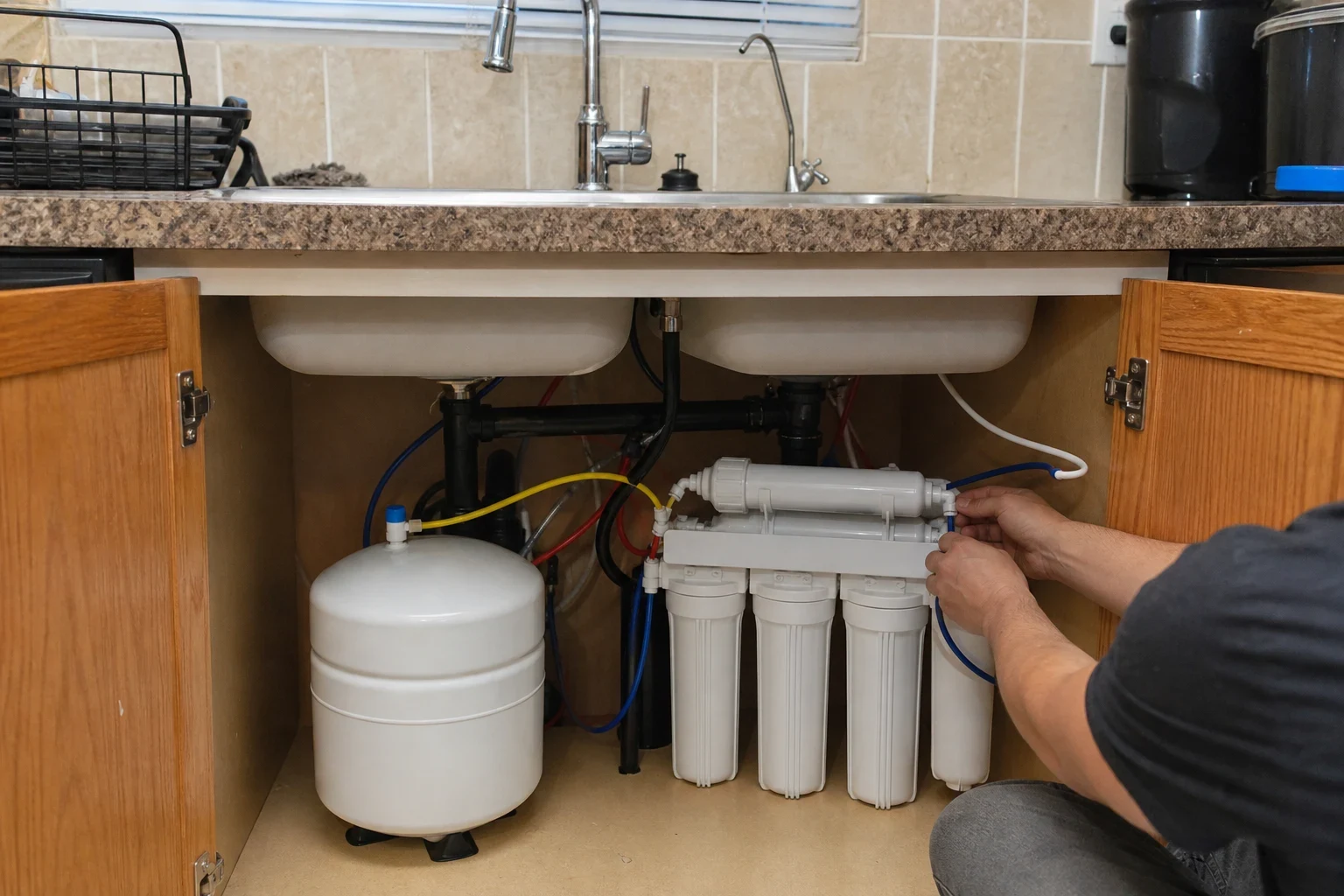
Under-sink reverse osmosis
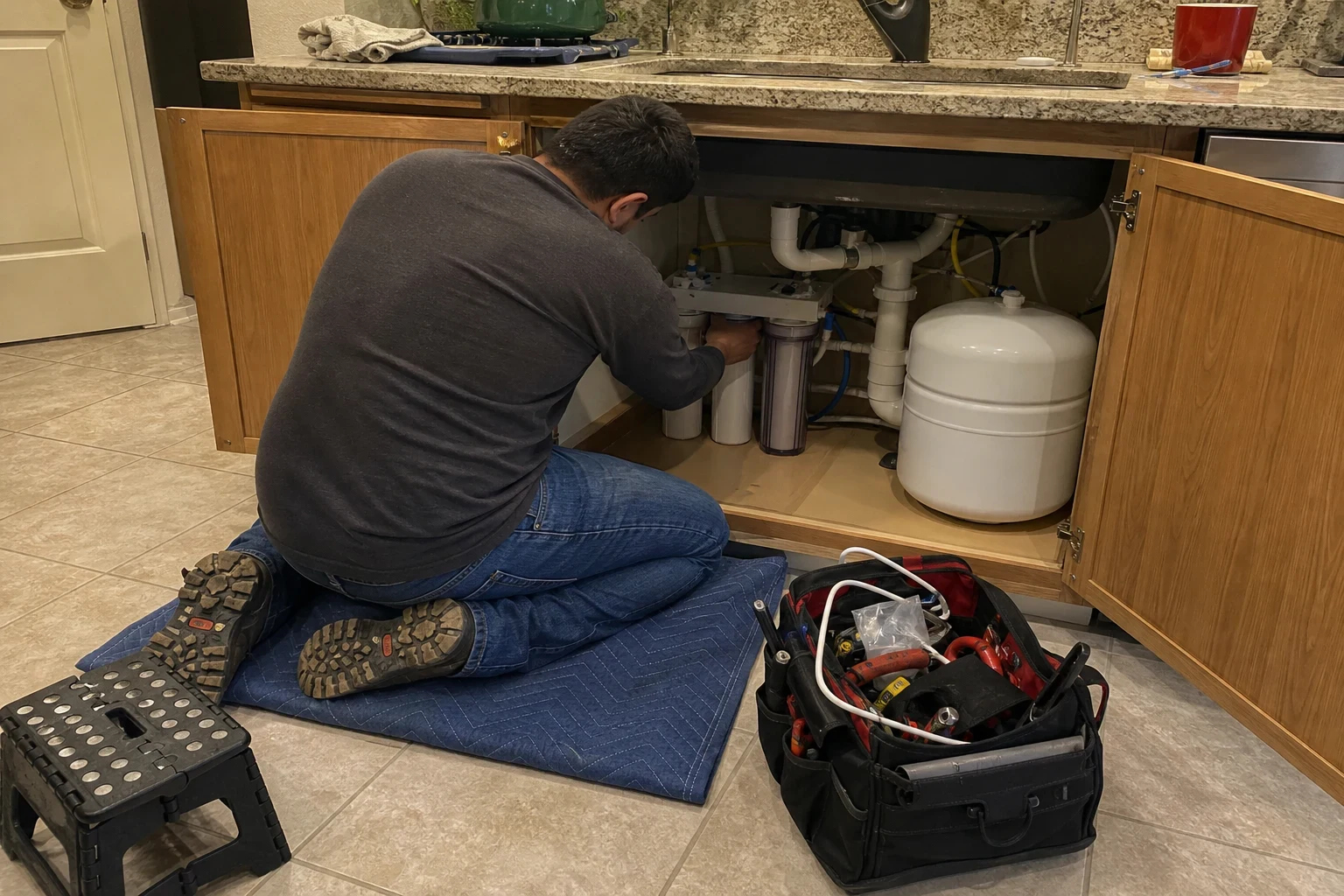
A four-stage RO system under your kitchen sink for drinking and cooking water, sized after we test what your tap actually delivers.
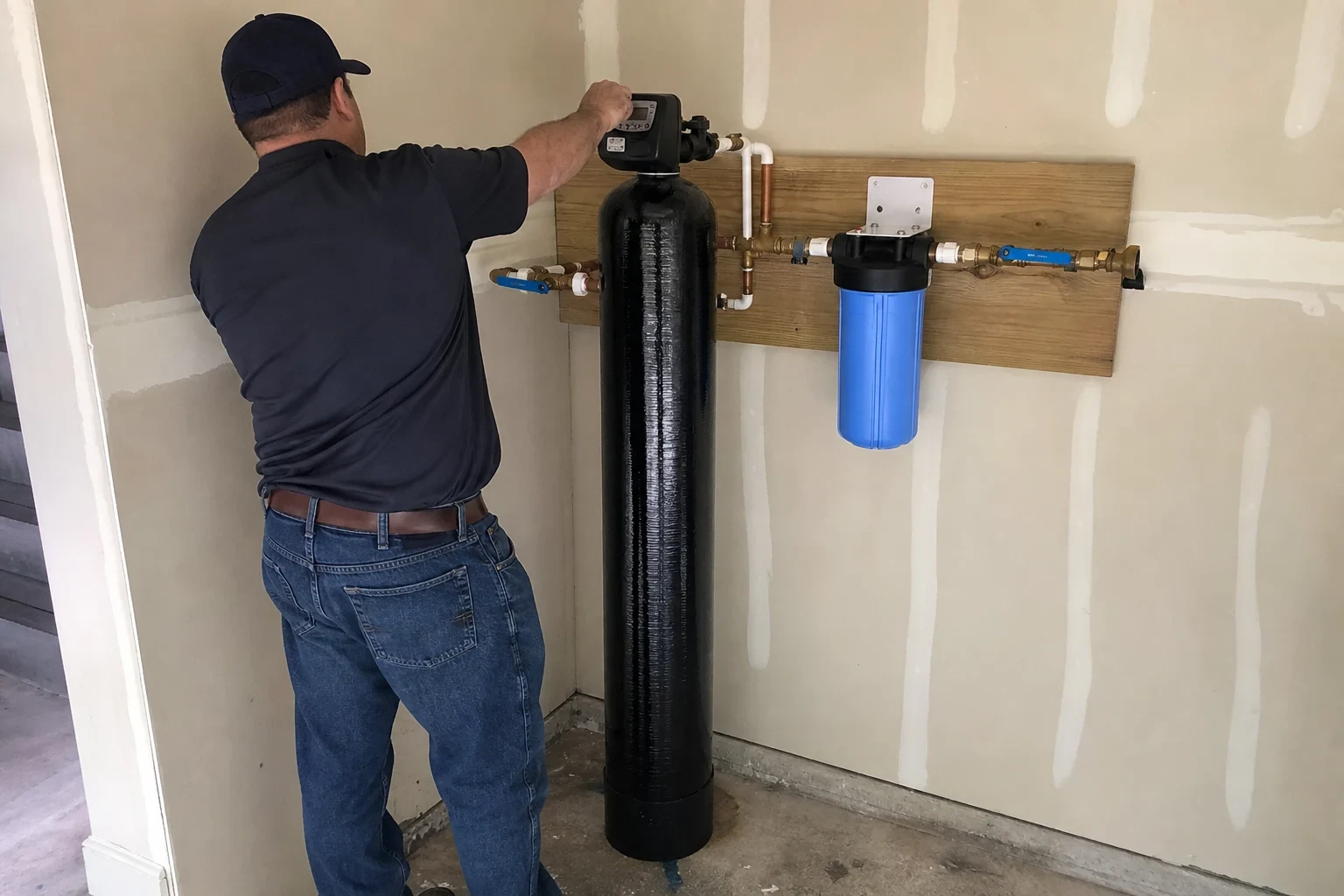
Whole-house carbon filtration
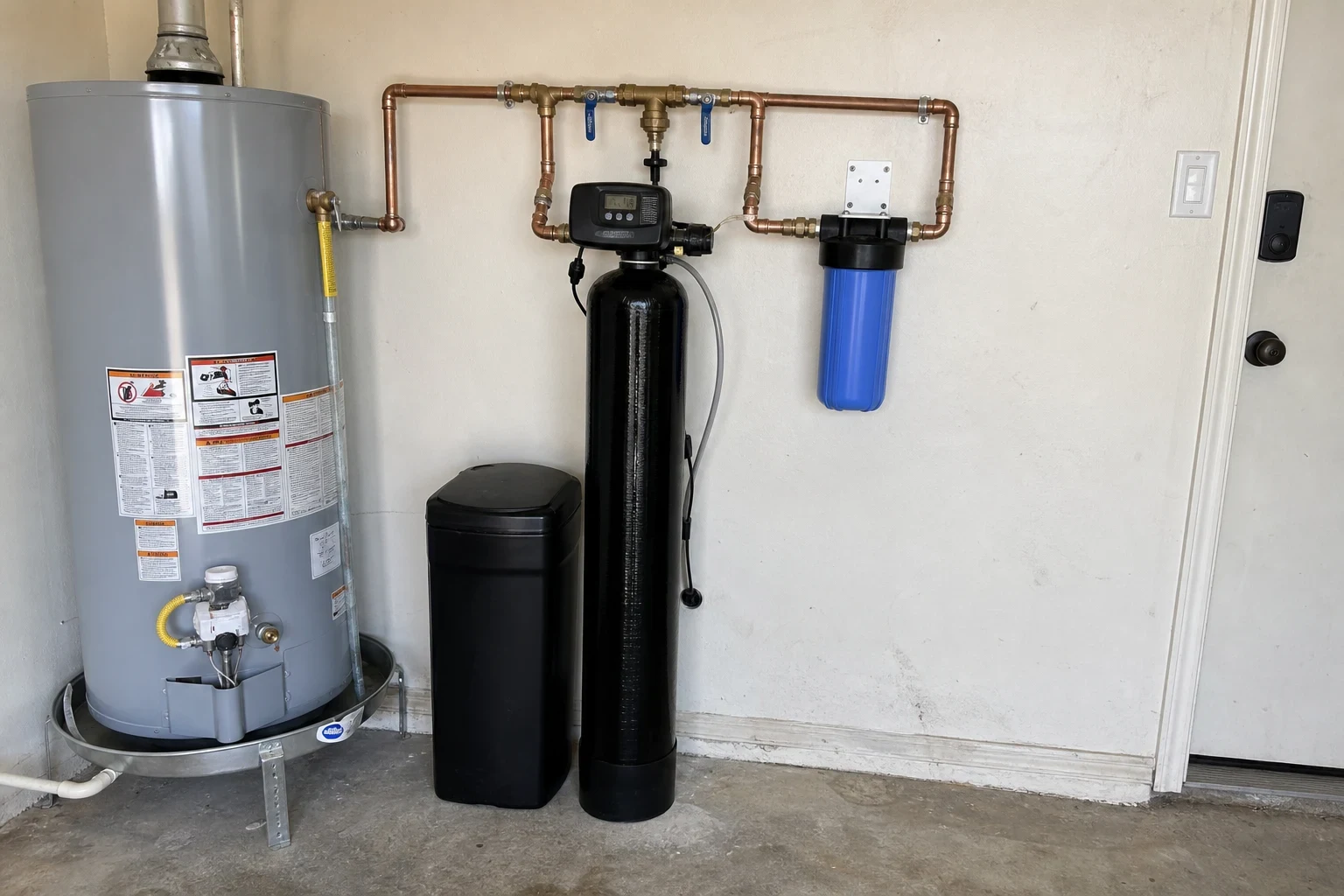
A carbon system on your main water line that cuts chlorine or chloramine taste and odor at every faucet and shower, sized from a test of your water.
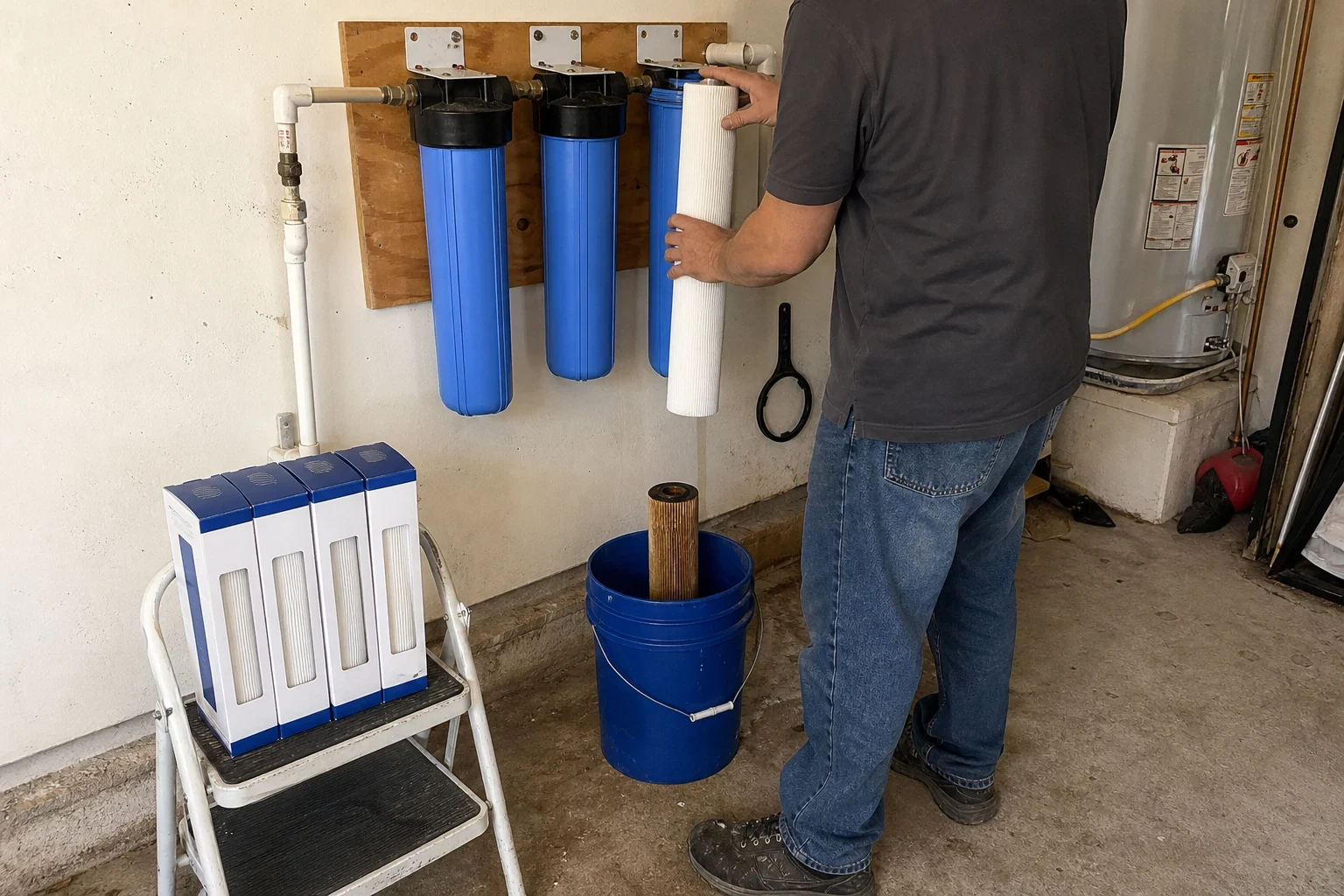
Filter replacement
Cartridge, membrane and housing service for the filtration systems in your home, with pressure and water readings taken before and after every change.
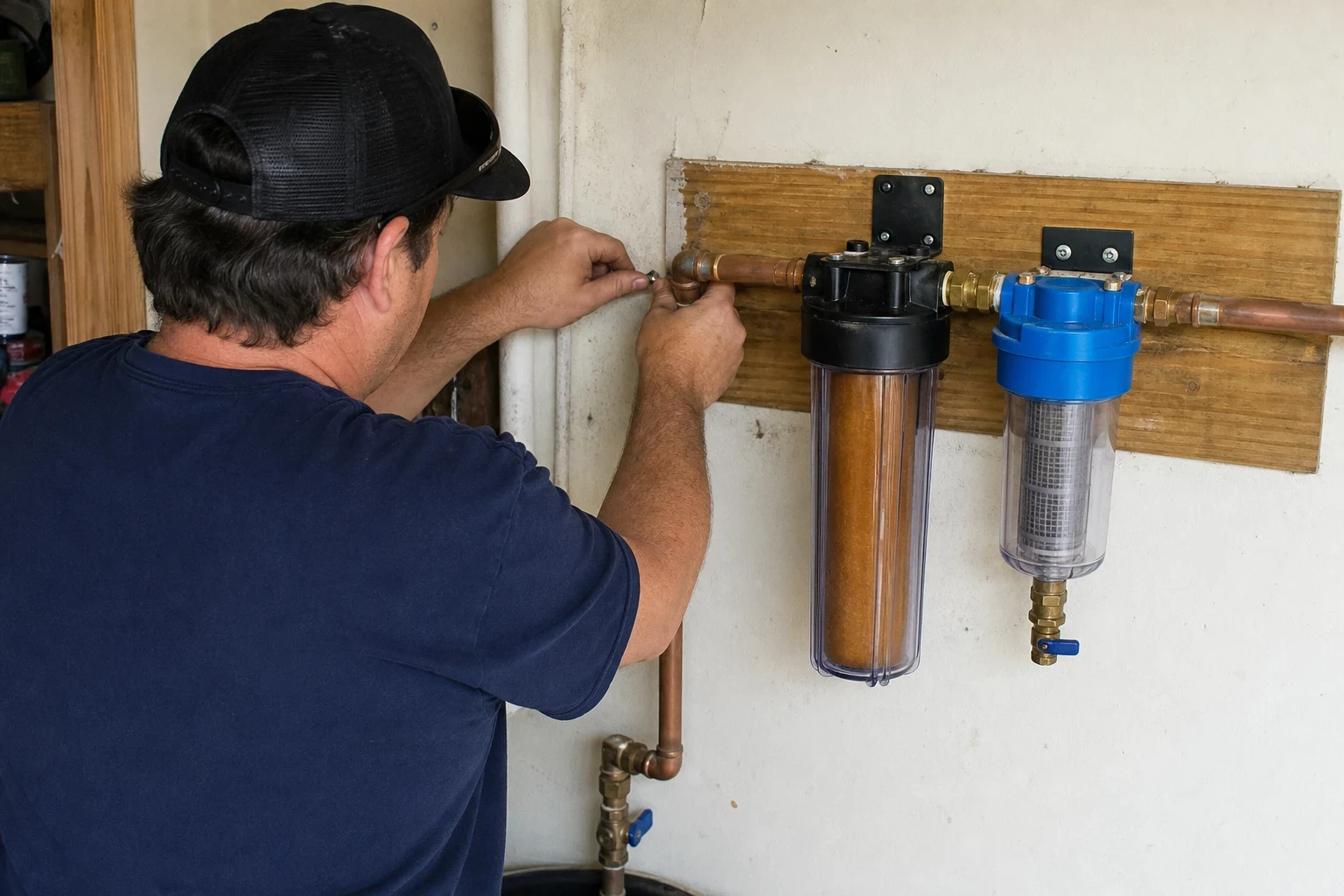
Iron and sediment filtration
Rust stains, orange water or grit in aerators traced to the real source, then removed with a sediment screen, cartridge or backwashing media tank.
How a Job Runs, From First Call to Clean Water
Most installs take one visit once the system is chosen. Here is what happens along the way.
- 1
Tell us what you have noticed
Call and describe any taste, odor, staining, scale or other worry. We also ask how old the house and its pipes are, which shapes what we test.
- 2
Testing at the faucet and the main
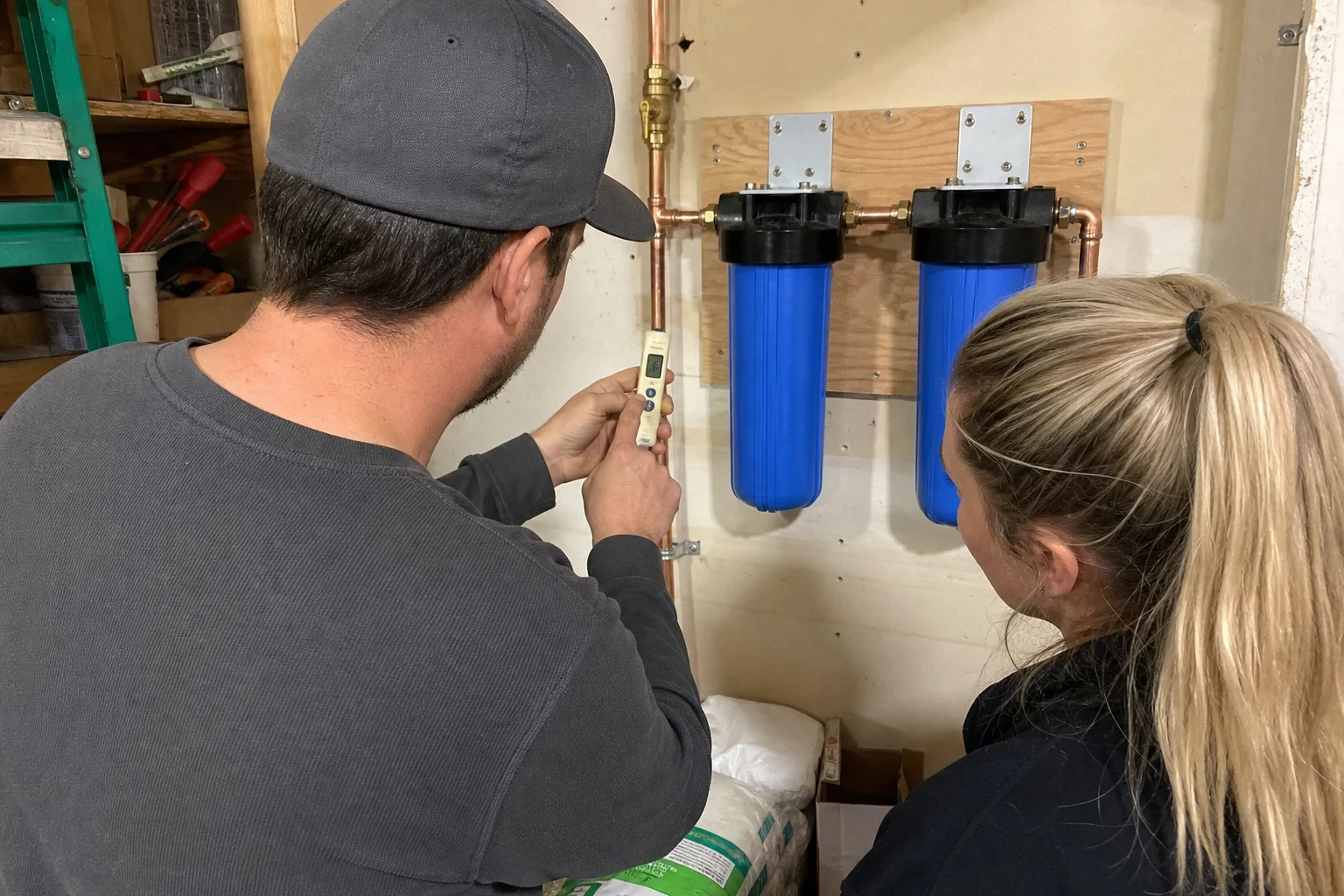
We collect samples and measure hardness, iron, chlorine, pH and dissolved solids on site. If a concern such as lead needs it, a sample goes to an independent lab and you get the complete report.
- 3
Go over the readings and a written estimate
We explain every number in everyday terms and which equipment deals with it and why. When your water is fine and filtering it would not pay off, we tell you that.
- 4
Install, flush and retest
We set the system in place, fit a bypass valve for future service, run new media until the water is clear and test again to confirm the fix. Before leaving, we hand you a maintenance schedule.
Why Homeowners Call Us First
The wrong filter costs money twice: once to buy it, and again when the problem it was supposed to fix is still there. We are BBB accredited and NSF certified, and we find the actual cause before we recommend anything.
- We read the numbers before the brochure
- A rotten-egg smell, an orange ring in the toilet and a white crust on the faucet point to three different causes. We test for hardness, iron, chlorine, pH and total dissolved solids, then show you which result drives which recommendation.
- We separate source water from plumbing
- Some problems come from the supply. Others start in your own pipes, like rust from aging galvanized lines or metals leaching at the tap. Knowing which one you have decides whether you need a whole-house system or a single point-of-use filter.
- Softeners only when hardness supports one
- A softener exchanges calcium and magnesium for sodium using a resin bed and regular brine cycles. If your hardness reading does not justify that salt and maintenance, we will tell you so and suggest something simpler.
- Line-item estimates you can compare
- You get the housing, the media or membrane, valves, fittings, bypass and labor listed separately. That makes it easy to see what you are paying for and to check our quote against anyone else's.
- Installs that respect your home
- We lay drop cloths at the work area, shut off and drain the line properly, and pressure-check every connection before we leave. Old cartridges and packaging leave with us.
About Water Filtration Duncanville
We are a family-owned water filtration company working inside homes in Duncanville and the surrounding area, rated 4.9 stars from 325 Google reviews. Our work starts where a lot of sales pitches skip: finding out what is actually in your water and where it is coming from.
That matters because older plumbing can add its own rust, sediment or metals on top of whatever the supply carries. A carbon tank will not fix a corroding pipe, and a softener will not fix a chlorine taste. We test, we explain, and then we install the system that matches your readings.
After the install, we stay available for filter replacement and maintenance, so the cartridge or membrane you bought keeps doing its job instead of quietly clogging under the sink. We offer a lifetime warranty on the majority of parts.
- In business
- 4
- Warranty
- Lifetime warranty on the majority of parts
- Certifications
- NSF certified
Questions Homeowners Ask Us
Something not covered here? (972) 885-6322
Can I safely drink my tap water?
North Texas city water is treated and checked against federal standards, so most concerns we hear involve taste, smell or plumbing, not safety at the plant. The open question is what the water meets between your meter and your faucet. A test at your own tap shows what is really in your glass.
What causes a chlorine taste or smell in my water?
Cities add disinfectant so water stays safe across miles of mains, and a trace of it still reaches your tap. Activated carbon captures it well. Installed on the main line, a carbon tank treats every shower, faucet and the laundry; installed under the sink, it treats only the kitchen faucet.
Will I need a water softener?
Not necessarily. Calcium and magnesium cause the white scale on fixtures, glassware and inside the water heater, and a softener is only worth its salt and maintenance when your measured hardness is high enough to create it. We test hardness first and suggest one only when the reading supports it.
Will a filter take out lead?
Lead tends to enter from old solder, fixtures or service lines in the house, not from the treated supply. Under-sink reverse osmosis reduces it well at the kitchen faucet. We suggest a lab test first so you know whether any lead is there and at what level.
Why are my sinks and toilets getting orange or brown stains?
Iron is the usual culprit, either carried in the water or released by rusting pipe. Which one it is decides the fix. Iron and sediment filtration treats iron in the supply, while corroding pipe may call for a plumbing repair instead.
How often should filters be replaced?
Sediment cartridges commonly last a few months, while carbon media and RO membranes go longer, depending on your water and how much you use. We set a schedule from your system and test results, and our filter replacement and maintenance service can take it off your hands.
How much time does an install take?
Under-sink reverse osmosis usually takes a few hours. Whole-house systems and softeners run longer, since we cut into the main, add a bypass and connect a drain. Your written quote includes an expected time.
What Sets the Cost of a Filtration System
Quotes differ from house to house because water, plumbing layout and daily use all differ. Below are the things that raise or lower your estimate, and we cover each one with you when we review it.
Estimates are written and itemized only after we have your test results and have seen where the system goes. We will not price a system by phone without knowing what your water holds. Free installation is included.
- What your test shows
- Chlorine by itself needs one carbon tank. Add iron and high hardness and you may need two or three stages in a row. Each extra contaminant adds equipment to the job.
- Flow rate and system size
- A whole-house unit must keep pace when the washer and two showers run together. Extra bathrooms and people call for a bigger tank or housing so tap pressure holds.
- Where the main enters the house
- An open line in the garage is a simple cut-in. A main in a cramped closet, behind finished walls or below a slab can take extra pipe and more labor.
- Access to a drain and power
- Softeners and backwashing iron filters need an outlet and a drain close by, and reverse osmosis needs a drain hookup under the sink. When those are missing, we install them.
- State of your current plumbing
- A stuck shutoff or cracked supply line may not survive a new connection and can need replacing first. We show you the worn part before starting, and it gets its own line on the estimate.
- Replacement media and cartridges
- Carbon, sediment cartridges, RO membranes and softener salt all get replaced over time. Your estimate includes expected upkeep so the full cost of owning the system is clear up front.
Find Out What Is Really in Your Water
Knowing your readings first keeps you from paying for a system that misses the real problem. Describe the taste, smell or stains you are seeing, and we will arrange a visit to your home to test.